
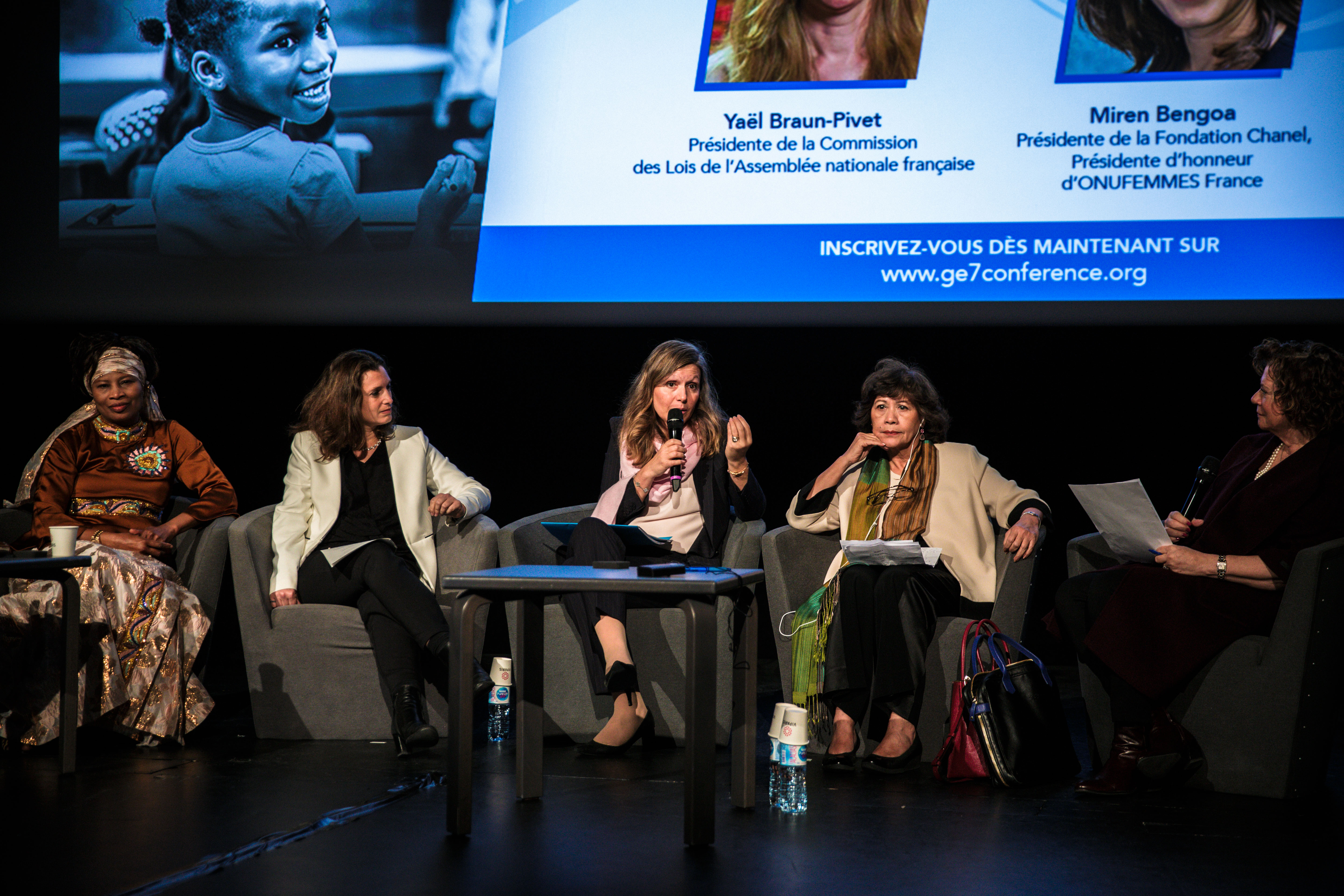
PANEL :
Girls' Education: A Vital Right for Promoting Women's Leadership
According to a World Bank report, 61 million children of primary school age are still out of school; 32 million are girls. However, this same report shows that increasing women's education helped prevent the deaths of more than 4 million children between 1970 and 2009. These alarming statistics call for imperative policy change and judiciary reforms. Developing countries cannot emerge from poverty without significant investment in girls' education. Early marriage leads to early pregnancies, and many girls see all their intellectual potential being taken away from them just like that.
To achieve gender parity, it is necessary to reduce the gender gap in girls' education and ensure equal access at all levels. Unfortunately, in many developing countries, men are more likely to have the opportunity to enter universities than women, while in many cases, women are top of their class in school. In a recent study, UNESCO shows that if all mothers had completed their education, the maternal mortality rate would be reduced by two-thirds, saving 98,000 lives.
According to the same study, if all women had access to secondary education, this would halve child deaths, saving more than 3 million lives, and 12 million children would be protected from malnutrition. The same report indicates that in sub-Saharan Africa, maternal mortality could thus be reduced by 70%, saving 50,000 lives. This round table exposed the main challenges facing young girls in today's education system to guarantee to preserve this vital right to learn.